


1

English Table of Contents 2026/1 
Page 3
Guests at the Kassák Club – Sebő Ferenc’s column. This article is about the time when Hungarian poet Illyés Gyula came to the dance house at Kassák Club in May 1978. He was interviewed there by Czakó Gábor. Here Sebő relates some of the interview questions and Illyés’ answers interspersed with his own commentary. Illyés had been living in France and Czakó asked if he knew of any movement like Hungary’s dance house movement that was going on in France. Illyés mentions brass bands that existed in every village and amateur folk theatre groups of 4-5 people which performed humorous plays that included folk dance and had the goal of making audiences laugh. Conversation went on to discuss Hungary’s genre of poetry set to music and Tersánszky Jenő’s role in that genre. Sebő and Halmos – alongside their dance house repertoire – also played poetry set to music.
Page 5
Ratkó Lujza: Woman’s Roles in Hungarian Folk Dance Tradition – Part 1. This is part one of a lengthy, academic style Hungarian dance ethnography study which originally published in a professional journal. It begins: “Hungarian folk dance holds a special place amongst the folk dance traditions of Europe… with the mixture of ethnic groups in the Carpathian Basin, the characteristic development of the folk culture there, the unique blending of older and newer layers of dance…. an unusually rich dance and music culture has flourished in the Hungarian language area where line and circle dances originating in the Middle Ages live alongside turning couple dances from the Renaissance, and the [so-called] ‘new style’ csárdás of the 18th, 19th centuries….”…..“Amongst the dances that survive, most have been preserved as social dances, or dances with an entertainment function (both couple and solo forms exist); but there are also a number of dances which had a role in ritual such as the circle dances (the women’s karikázó done during lent) and other dances connected to the wedding, May tree/May pole and fire at Saint Ivan’s Day, etc. So, there are secular dances and those once related to ritual, cult, magic or had some other sacred connection.” Following a brief discussion of how couple dances are not necessarily included in the sacred, cult layer of dances because the poles of the male-female relationship represent a more profane level in Hungarian traditional dance, she goes on to give a brief overview of the areas to be discussed at greater length later on within the article: women’s role in Hungarian dance tradition – in the solo dances, the couple dances, and in the women’s circle dance – the karikázó. Published first in: Studies in Dance Research Tánctudományi Tanulmányok 2002–2003 pp 157-177 (2005).
Page 8
Poems by Bágyi Bencze Jakab – Literary coulumn by Széki Soós János
Page 10
Publication review: Gáll Timea: Kölcsönkért kovász…[Borrowed starter] 2016. Old and new dishes from Csíkmadaras (privately published). A book on the food, cooking traditions and recipes handed down from the author’s family who ran Zsigmond Mill in Csíkmadaras/Mădăraș, Transylvania (RO) which now functions as a guest house. In Hungarian, the book passes on atmosphere through local dialect with information on surroundings, infused with aesthetic, ethnographic and sociological information regarding the old mill and the family that ran it. The reviewer praises Ádám Gyula’s photography whose photos provide the perfect mood for the publication. 230 pages, hardbound. Review by Lokodi Imre.
Page 11
The 2026 Moving Picture Photography Award in the ethnographic film category went to Dénes Zoltán – whose work is well-known in many films related to the dance house movement. A Life-Time Achievment Award was given to Papp János (born 1940) whose photography and directorial work for the Hungarian Museum of Ethnography included films on the Hungarian hurdy-gurdy, the Hortobágy hats, the craft of horse-drawn cart making, and many, many more. Announcement by Csorba Judit Dorottya – first published on ethnofoto.neprajz.hu
Page 12
New exhibition: Hungarian Museum of Ethnography Feb. 12 – July 5, 2026 – English title: "Uncropped – Fragile Photographic Realities". The exhibit presents photographs from Hungarian countryside photographers and studios of the 1910s. These are photographs made with old “glass plate negatives”. The exhibition presents selected photos from the museum’s vast collection numbering more than 25,000 items. The photographs portray newly recruited soldiers, soldiers with their families and friends, women with their families and themes consistent with the WWI period. Announcement by the Museum.
Page 15
Johannes Brahms’ Hungarian Dances: Sources, traditions, parallels, repercussions – from a book by classical music researcher, historian and musicologist, Sziklavári Károly (Hungarian Heritage House, Budapest 2025).
Page 15
PUPEK examines the complexities and details of Central Europe. With eight dancers, musicians and performers, it points out, in Milan Kundera’s words, the weary wisdoms and lazy generalizations. We all love our nation, but there have been and are moments when our European identity breaks through the borders of national identity. The piece was presented eleven times at the La Luna Theatre in Avignon, where it achieved outstanding critical and public success. Thanks to the published professional reviews, it received invitations to the Švanda Theatre in Prague, the National Theatre in Bratislava and the Studio Theatre in Warsaw.
Forgive me for having been a bad youth sometimes. I want to live, but now I am needed. So that truth may triumph, so that humanity may prevail, so that lies and hatred may die. By now existence may seem unbearably light and meaningless. Somehow we have managed to crumble into our own destiny, like Kundera’s protagonists. Forgetting renders much of human effort pointless, but our struggle is precisely this. This, the struggle of memory against forgetting, here at the navel of Europe. Please, do not cry! It would be a waste of energy. My message is: without an idea, man does not live, he merely exists.
Programme of House of Music
Page 16
Conversation with musician and zither player Helka (Debreczeni-Kis Helga). Helka is her chosen stage name. She is a young musician who successfully connects the world of folk music and tradition with the restless, constantly changing digital times. She has an active online presence with her own website (including English version), Facebook, blog, Tik Tok and so on. She graduated from the Hungarian Academy of Music where her instruments were zither, violin and coboz. Today she performs and teaches music. In 2017 she was a contestant on Hungarian Television’s Páva folk talent contest and says the exposure on the TV talent show gave her career a nice start. When she was 11 years old, she found her first zither on her grandfather’s shelf – it was covered with dust and the strings were rusty. At the beginning of her career, she played strictly traditional folk music. Nowadays she also uses an electric zither and has gone on to do improvisation, arrangements of traditional tunes and her own music – for which she uses looper pedal, reverb, delay, and harmonizing pedals. She plays with the band Új Gereben, has worked with saxophonist Szokolay Balázs Dongó and Békés Banda. Last year released a CD entitled “Tündevény”. Interivew by Grozdits Károly.
Page 20
Exhibition announcement – Budapest’s Hungarian Heritage House announces two new exhibitions celebrating 25 years since it’s establishement. The exhibitions shall run between February 5th and November 29th, 2026 at Corvin tér, in Budapest’s 1st district. "Tulip and Sage – gardens, periods in time, folk art" Curated by Dr. Czingel Szilvia. Flowers in the garden, flowers in Hungarian embroidery, memory of flowers. "Soap – a cultural history of Hungarian cleanliness" Curated by Dr. Czingel Szilvia and Keszeg Anna. The exhibition is the result of cooperation between Hungarian Heritage House, Hungarian Museum of Industrial and Folk Arts, and Moholy-Nagy University of the Arts. It presents the culture of cleanliness in the past, along with contemporary problems in sanitation, overconsumption and conservation.
Page 21
New film: “Hungarian Wedding/Magyar menyegző” (director: Káel Csaba). Filmed in Hungary and Transylvania, a romantic Hungarian folk dance and music film telling a story set in the end of the 1970s and working with the strength of folk tradition and culture. Its world premiere was at the Tallinn Film Festival fall, 2025; it opened in Hungary January 22, 2026. The director describes the film as a ‘Rom-Com’. Here is printed an interview with “Hungarian Wedding”/”Magyar menyegző” director Káel Csaba. The film is centered around the folk music and dance of Transylvania’s Kalotaszeg region. The director hopes to reach beyond the small sector of those already interested in folk music and dance with a story about youth that any person can relate to. In part he wanted to relay his own experience at a Transylvanian wedding and the life energy he felt there. He describes himself as a film director that is fussy about his work, for example if he’s making a film about music, nothing should get in the way of the music. He also mentions that he wanted to portray the amazing Kalotaszeg traditional costume as an organic part of life, rather than as a museum attraction. When not directing films, Káel is director of Budapest’s Palace of the Arts. By Horváth Bálint – first published Jan 28, 2026 at magyar.film.hu.
Page 27
Review of the new film: Hungarian Wedding/Magyar Menyegző – After familiarizing us with the plot of the film the reviewer comments: “In long scenes full of movement, rhythm and many people, Kalotaszeg folk dance comes alive – sometimes without any particular dramaturgical function – at other times developing an important turning point in the story. “Hungarian Wedding” makes its point mainly through dance scenes when director Káel Csaba lets the film breathe, here the story line isn’t rushed, rather we see a rhythmic montage develop through the great choreographies which work even when they don’t necessarily move the story along….”Hungarian Wedding” is a film made mostly to please the Hungarian general public – or it can be recommended to Hungarians just getting to know folk culture, especially if they have foreign friends that are interested in seeing how Hungarians have fun.” By Pauló-Varga Ákos – first published Jan. 22, 2026 at magyar.film.hu.
Page 28
New recording: Király Dávid: "Országjáró" – traditional bagpipe music of the Carpathian Basin. Király’s first recording is a result of 15 years of study. He plays 13 arrangements of bagpipe tunes – or compilations of tunes – from today’s Hungary and present day Slovakia. The bagpipe traditionally played in this region is the so-called ‘kontra chanter bagpipe’ known for its double-bored chanter. Most of the cuts on this recording are played on solo bagpipe, though a few are played with accompaniment. The project received funding from the Halmos Béla Program. Announcement by Király Dávid.
Page 30
Series – Old writings still interesting and/or relevant today: Kalotaszeg: a cultural concept. By Kós Károly – from “Kalotaszeg” 1912. The Kalotaszeg Region [of Transylvania, today in Romania] is described here as a completely closed area in terms of ethnography; most of which is also closed geographically. "…Kalotaszeg is the most Hungarian, the most intelligent, the most cheerful group where decoration is lush but not garish – like a hillside covered in wildflowers before mowing… Seen from the train the countryside is bleak and bare, with low, rocky, treeless hills…and an occasional steeple-less, old Gothic church surrounded by lilac bushes…. the air is wonderfully clear. It is not possible to live from the land here; they work in nearby factories, or do brick laying, stucco or masonry work, carpentry. They don’t eat too much, but spend a lot on clothing and home decoration. The last large landholder in the region was Count Bánffy whose lands fell prey to land reform… Not many folks from Kalotaszeg joined the waves of people immigrating to America…”
Page 32
New publication: The legacy of Csókos Varga Györgyi – edited by M. Nagy Emese published by the Etyek Workshop Foundation, Etyek, Hungary, 2026. The volume is a tribute to the work of artist and craftsperson Csókos Varga Györgyi (1926–2012) upon the 100th anniversary of her birth. Csókos Varga earned her diploma from the Hungarian Academy of Art in Budapest. She and her husband eventually settled in Etyek, Hungary and established a family workshop there. She worked with classical techniques as well as more experimental methods. They followed the modern European movements in art of the time, and later became involved in the folk arts revival that began in Hungary in the early 1970s. Csókos Varga Györgyi’s work in folk traditions influenced Hungary’s ‘Nomád Generation’ movement. Csókos Varga and her husband were involved in creative arts and crafts workshops in Hungary in Tokay, Hajós, Velem and so on. She worked with every imaginable craft and medium – from weaving to mosaic. Anouncement by M. Nagy Emese working under a grant from the Hungarian Academy of Arts.
Page 34
14th Nationwide Youth Solo Folk Dance Competition – a summary of the final round of the solo dance competition for youth held on January 17thth in Eger, Hungary with statements by members of the jury. Contestants had to compete successfully first on regional levels in order to be able to continue to the finals where they danced specified compulsory material and a dance of their own choice. Boys aged 15-16 solos compulsory material: Szilágyság cövekelés and zsibai. Couples aged 15-16 years: Szilágyság csárdás and ugrálós. Boys aged 17-18 years solo compulsory material: Szatmár solo Gypsy dance. Couples aged 17-18: Szatmár couple Gypsy dance. 57 dances made it to the finals level of the competition. The jury awarded 15 ‘pearl necklaces’ to outstanding girl dancers and 24 ‘silver buttons’ to outstanding boys. Members of the professional jury were: Demarcsek György, Sikentáncz Szilvester, Fitos Dezső, Kácsor-Ignácz Gabriella, Fundák-Kaszai Lili. The jury members all have extensive background, experience and training as dancers, instructors, ensemble leaders and jury members. The competition was organized by Eger’s Lajtha László Folk Dance and Folk Music Association, the Heritage Children’s Folk Dance Association, Martin György Folk Dance Association, with support from: Csoóri Sándor Program, Hungarian Heritage House, and Assistant Minister Novák Irén. Report by Bécsi Gyula.
Page 39
Dance review: On November 12, 2025 Zsuráfszky Zoltán’s Magyar Nemzeti Táncegyüttes [Hungarian National Dance Ensemble] performed a special evening program looking back on Zsuráfszky’s career and body of work – at the Nemzeti Táncszínház in Budapest. Choreography was by Zsuráfszky Zoltán and his wife Zsuráfszkyné Vincze Zsuzsa with by Kiss Ferenc, Rossa László, Szarka Tamás. “Zsuráfszky’s evening explored the connections between the art of dance and literature, and brought about, in the meantime, a ‘poetry of movement/body language’…. The danced association to poetry is even more effectual and absorbing than the message of the poetry – with unsaid content appearing in the movement. We were witness to the creative transformation of a form and language within the framework of a retrospective performance.” By Lénárt Gábor from tánckritika.hu.
Page 40
New series: Hideg Anna’s folk tales. A native of the village of Ördöngösfüzes/Fizeşu Gherlii, Mezőség region, Transylvania, RO – this year Hideg Anna celebrates her 90th birthday. From Magyar Zoltán‘s book of tales and other stories from Ördöngösfüzes – Mentor Kiadó, Marosvásárhely 2007. This is the tale an old King and Queen’s three sons. They finally had to tell their sons it was time to see the world, find wives and get married. The sons set out, and soon found themselves in the city of the Red King who was said to have a very beautiful daughter. The sons asked the Red King for her hand in marriage. The Red King said, ‘there are three of you; but I have only one daughter!’ He told them to go out for a year and find gifts. ‘The one who brings the most valuable gift can marry my daughter and will get half my kingdom.’ The three sons each set out alone to search for gifts. One son found a spyglass. One found a special cloak which would take a person wherever they wanted to go in a blink of the eye. The youngest son found an orange that could bring the dead back to life. After a year they met at the crossroads. They tried out the spyglass and saw that the beautiful princess had died. They used the special cloak to go quickly to the Red King, the youngest prince used the orange to bring the princess back to life. The princess would marry the youngest son because he brought her back to life. They held a wedding so big that wine flowed on the streets from Hencida to Boncida. The two older brothers were sad because they didn’t have brides. They looked in the spyglass and saw two princesses hurrying to the wedding. They used the magic cloak to go pick up the princesses – daughters of the White King. They all went to the wedding. All’s well that ends well, and three weddings were held at the same time. The sons went to introduce their wives to their parents and everyone lived happily ever after.
Page 41
Commemorative Year on the occasion of the 100th anniversary of the birth of Zoltán Kallós – announcement by Transylvanian Heritage House.
Page 42
Hungarian customs for washing dishes to oral hygiene – after several years addressing Hungarian food and tradition, this column now moves on to peasant customs surrounding personal hygiene and household cleanliness. After eating, the next step is cleaning up, including related hygienic practices such as washing hands and brushing teeth. This series (and also a book edited by Juhász Katalin) comes out of a 2006 exhibition at the open air village museum in Szentendre, Hungary. The book publishes studies on tradition, cleanliness and personal hygiene. Covered in this article are: customs for washing dishes, handling left-overs and waste and oral hygiene. By Báti Anikó.
By Sue Foy
2
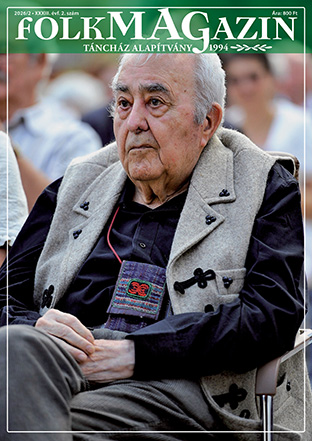
English Table of Contents 2026/2
Page 3
100th Anniversary of Kallós Zoltán’s birth
Kallós Zoltán 1926–2018 was born, raised and died in his family home in the village of Válaszút/Răscruci in Kolozs County, Transylvania (today in Romania). This article salutes Kallós and his life work, with information on his life path and education. He was a dedicated and lifelong collector of folk music, dance, songs, ballads, costume and folk art of his native Transylvania. He began collecting independently alongside working as a school teacher in Transylvania beginning in 1946. He worked first in the Kalotaszeg region, then in Moldavia, finally in Gyimes. Later on he worked closely with ethnographers from Hungary and eventually established a center and archive for folk music and culture in Válaszút to pass on knowledge and house his collections. His collection of ballads from Gyimes (published in 1971) proved to Hungarian folklore researchers that the ballad was still a living form in Gyimes. A point made here is that many of the Hungarian ethnographers came from Budapest or other larger cities, whereas Kallós - born in the village of Válaszút in Transylvania’s Mezőség region, living and working in Transylvania - brought his inside point of view, understanding and access to the material and collection work. By Sebő Ferenc.
Page 5
Ratkó Lujza: Woman’s Roles in Hungarian Folk Dance Tradition – part 2
Part two of this study begins with the statement: “In Hungarian dance tradition women have roles in solo, couple, and group dance forms.” However this section of the study does not discuss in detail women’s roles in the solo and couple dances given that: the woman’s solo role originates from a men’s solo form; in the couple dances - the women’s role is subordinate to the men’s role. Here the focus is on the women’s circle dance – the karikázó. She refers to it as the woman’s dance genre ‘par excellence’. Only woman participate in this sung circle dance – without instrumental accompaniment. It is danced in a tightly closed circle, the dancers dance in unison, striving to move and sound as one. Traditionally the karikázó is done during lent. It was to be danced outdoors in a location that had magical significance for a village, by young or teenaged girls. The karikázó is all about: waiting for spring, fertility, the eternal circle of the woman’s role in life. Published first in: Studies in Dance Research Tánctudományi Tanulmányok 2002-2003 pp 157-177 (2005)
Page 8
Short story by Kacsirek Ottó: This story begins with a quote about tired angels that have already fallen from above. This is the story of a statue that appeared unnoticed and mysteriously on the shore of a large lake. Over time the village people noticed it and decided to make it into a tourist attraction for which they charged fees that were then used to buy their nice cars and build large homes. When the statue needed restoration, rather than restoring it, they decided to get rid of it. The day they went to remove it happened to be a few days before Easter. When they got there, the statue was already gone. The crowd gathered saw the statue heading out on the lake, walking on the water.
Page 9
Announcement for opening of the Csoóri Sándor Memorial House in the village of Zámoly (Csoóri’s birthplace) in Hungary’s Fejér County. The elder Csoóri [1930-2016] - Hungarian poet, writer, journalist, politician, supporter of the táncház movement - was born in Zámoly where he went to school until the age of 12. Csoóri returned to Zámoly to visit his parents as long as they were still alive. After his parents died their house was empty until a recent 2025-2026 initiative to restore it and make it into a historical site. Now the house functions as a community space with a permanent exhibit dedicated to Csoóri’s lifework. It is run by the Petőfi Museum of Literature and an Association for Memorial Houses of Literary Figures. Materials from family collections were made available for the exhibit. The announcement begins with a Csoóri poem about stepping into the old house. First published at: pim.hu/hirek/csoori-sandor-emlekhaz-atadoja
Page 10
Old writings still relevant today:
2014 Andrásfalvy Bertalan: Love and caring in folk tradition - Folklore’s role in maintaining health in society – Part 1.
Society’s greatest weakness today is the inadequacy of human connections: with one another, the natural environment, and with God. People grow lonely for lack of human connection, or in bad relationships. The lonely person becomes anxious and full of self-pity, seeking compensation in extravagant consumption or other forms of excitement eventually becoming weak and vulnerable plagued by emotional and physical illnesses. Here Andrásfalvy shows ways in which traditions, customs, related ‘institutions’ have helped create, maintain and support human connections. Discussed are: the most important kinds of caring relationships (family, friends, a mate), how they form, and are reinforced by folk customs. In this section the mother and customs related to mothering, birth and infant care are described. A mother’s love for her child can also be expressed through lullabies, examples of which are provided. The tradition of a girl’s best friend, maid-of-honor and godmother – relationships which are outward expressions of love, caring, friendship, security - are also described here. To be continued. First published in “Magyar Művészet” Hungarian Academy of Art’s theoretical journal 2:3-4. pp 98-106 (2014)
Page 12
The Hungarian Museum of Ethnography announces a 2026 series of events on shepherds, pastures and the protected lands of the herders’ world. The museum joins the UN’s FAO international year of herders and pastures with this series of programs. Nearly half of the earth’s surface is pasture. Even today several billion people make a living in this world of grazing and animal husbandry. This year shall be dedicated to raising awareness and interest in protecting grazing lands. Budapest’s Museum of Ethnography’s next event is on Saint György’s Day - April 25th – the traditional beginning of the grazing season.
Page 15
Interview with Hartyándi Jenő on his series of ‘peasant salon’ evenings in Ravazd - a village in northwestern Hungary. This writing tells about the series of weekly events organized by film photographer and cultural organizer Hartyándi Jenő (a founder of the Media Wave international film and music festival). Each salon evening focuses on one musician or artistic personality often with an emphasis on their roots and life path. These lecture or portrait interview events are documented live by Hartyándi, then posted online in a kind of podcast format. The series began in February 2022 and has since included more than 200 evenings with some 50 interviews per year. The first year his series received support funding from the Pajtakult Program and other sources. The documented interviews are now being added to the archives of the Hungarian Heritage House. A small community has grown around the events. Interview, photos and text by Henics Tamás.
Page 16
New Publication: [Report on Folk Arts 2026] - Népművészeti Jelentés 2026 – The Hungarian Heritage House (HHH) has released the results of studies and surveys to determine the extent to which the folk arts revival and folk arts in general are embedded in Hungarian society and public opinion. The project examines policies for funding and support and their impact mechanisms; and examines institutional routes for passing on knowledge. In his summary, HHH Director Both Miklós states that the report will only have meaning when conclusions are turned into active projects on the institutional level, in training, in the professions and for audiences. This is the second such report published by HHH. Survey results showed for example that: 75-82% of those asked, agreed that folk dance, folk crafts and live story telling should be included in public education.
Page 19
Authenticity and the Szászcsávás Band. Written by the person – a Hungarian musician from Budapest’s dance house movement – who since the early 1990s has supported, recorded, befriended and toured this group of traditional musicians from the Transylvanian village of Szászcsávás /Ceuaș, in Maros/Mureș County, Romania. In this article he describes the band and the musicians addressing the following eight basic questions/observations/criticisms – that have arisen surrounding the band over the years: 1) Their practice of harmonizing has changed as a result of their contact with dance house circles and foreign tours; 2) The group (in that format) has never performed at home in their region; 3) The younger members of the band only became musicians because the band offered them the possibility of travel – their quickly acquired skills cannot be considered authentic; 4) Because of all their travels abroad the band has acquired so many new melodies that they can no-longer be considered authentic; 5) Now they don’t even remember melodies they knew 20-30 years ago; 6) What they know now – they play in a ‘very Gypsy style’ – not in the original style….”; 7) The newly acquired foreign melodies and line-up of musicians for touring – further the disintegration of the folk music traditions of their region – the Küküllő Region; 8). The name “Szászcsávás Band” is actually a detrimental thing…In his responses to the above points, Szánthó provides us with plenty of history on the members of the band and their music over the nearly 40 years he has been working with them. By Szánthó Zoltán.
Page 22
Néptáncantológia 2026 – The Folk Dance Anthology presents a selection of the best folk dance choreographies for amateur folk dance groups of the previous year. This year the event was held on March 1st at Budapest’s Operett Theatre, directed by Diószegi László. For the last 30 years it has been organized by the Martin György Folk Dance Association. Groups from Budapest and all parts of the county presented their work. The reviewer gives 13 concise summaries of presented choreographies naming each ensemble, its directors, choreographers and band, with a short, well-informed description of content. This event provides the audience with an excellent chance to get an overview of the status of Hungary’s folk dance movements. By M. Nagy Emese - Hungarian Academy of the Arts art theory grant recipient.
Page 28
Series: Hideg Anna’s folk tales. Native of the village of Ördöngösfüzes/Fizeşu Gherlii, Mezőség region, Transylvania, RO - this year Hideg Anna celebrates her 90th birthday. This tale is from: Magyar Zoltan‘s book of tales and other stories from Ördöngösfüzes - Mentor Kiadó, Marosvásárhely. 2007.
There once was a young prince who set out - accompanied by his faithful servant - to look for a wife. First night on the road they slept in the forest. The servant was kept awake by 2 black ravens talking during the night about bad things that would happen when the prince brought his new bride home to the palace. The ravens said that whoever heard this information and told anyone else about it would turn into a pillar of salt. Other nights the ravens predicted more bad things - always with the same warning not to tell. The faithful servant was torn - he wanted to save the prince and his bride from harm - so he told them and then he turned into a pillar of salt. The prince then had to set out to consult a wise old man known as the ‘Luck of Lucks’ on how to reverse this and save his servant. It was a tough and adventurous journey but the prince found and consulted the Luck of Lucks. The prince returned home to his bride and a newborn son and changed the pillar of salt back into his faithful servant. The tale ends with: ….and they are still alive today, if they haven’t died yet. Whoever doesn’t believe my tale, go and find out...
Page 34
New Publication - Pozsony Ferenc: [Székely Folk Culture…] ‘A székely népi kultura… ‘ Krizsa János Néprajzi Tarsaság, Kolozsvár/Cluj, RO. 2025. This volume publishes the results of decades of work by Pozsony Ferenc: ethnographer, retired university professor from Székelyföld. Main topics of the volume are: research on folk ballad, Székely society, history and spread of research on Székely folk culture and celebrations, Székely gates, wooden grave markers, painted furniture, chimney cakes, potato bread, mountain shepherding, and the collections and practices of Székelyföld museums. Book review by Fekete Réka.
Page 37
Conversation with dancer Tókos Attila.
Dancer and choreographer Tókos Attila is a soloist in the Hungarian National Dance Ensemble, he also works on independant projects which go beyond folk dance - extending into contemporary modern dance and other stage genres. In his work the elements of folk dance form the basis – but he is continually searching for other directions. He was born (in 1984) and raised in Transylvania, but didn’t start dancing until his audition as a young teenager to study folk dance at the Academy of Dance in Budapest. He tells not only of his career until now, but also talks about how long a professional dancer can expect to continue dancing, and the kinds of injuries and wear and tear on the body that can occur. He maintains a strict physical regimen in order to continue dancing as long as he can, describing some of his methods for staying in shape. He plans to continue his activities in choreography when he can no longer perform. Interview by Grozdits Károly.
Page 43
Food in Hungarian Tradition – Changes in traditional wedding fare in Cserépfalu
Cserépfalu is a village located in the Bükk region of northern Hungary. “The wedding menu of Cserépfalu changed considerably over the second half of the 20th century in line with nationwide economic, social, lifestyle changes and tendencies. The course of events of the wedding was simplified, for example magical elements were left out, weddings became shorter, the number of meals served also decreased, while certain meals offer more and more food, and/or more and more courses.” What has remained on the wedding menu throughout the years is the soup made with gently boiled meat and vegetables served with the special wedding noodles: ”csiga tészta”. Wedding guests were/are served at least a several course lunch or supper, and another meal at midnight. In former times a sweet, yeast-leavened egg bread baked special for weddings, the ‘kalács’, was an important part of the wedding fare appearing at various times during the series of wedding events. Now this sweet baked bread is often replaced by fancy wedding cakes served as desert at the main feast. Before a wedding a crew of folks gathered to prepare for the wedding festivities and meals - the crew was fed proper sit-down meals while working. Neighbors and relatives donated food and/or money towards the festivities. A list was kept of the donated goods. An example of a list from 1996 begins with: 3 pigs, 50 liters fat, 110 hens, 65 kilograms ground meat, etc. By Báti Anikó - based on the author’s 2019 monography of eating habits of Cserépfalu. Published: Budapest Hungarian Ethnographical Association.
By Sue Foy
3
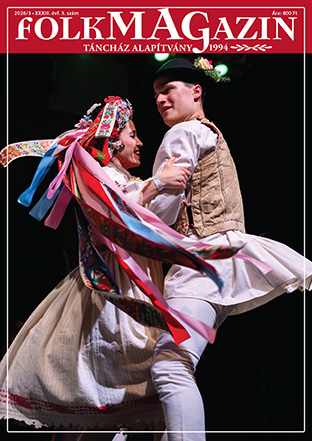
English Table of Contents 2026/3
Page 3
Sebő Ferenc (1947 – April 27th 2026.) FolkMAGazin prints selected farewells and comments that appeared on social media in the overwhelming wave of response to the news of his death. These words from more than 30 of Sebő’s close friends, colleagues, students, acquaintances celebrate his talents, knowledge and music. They express so much respect and esteem for Sebő Ferenc who, as a founder, a leader, musician, singer, teacher, professor, inspiration, musicologist, researcher and artist – has been such an important figure in the dance house movement.
Sebestyén Márta wrote: “It is uplifting to listen to [Sebő’s] final dynamic speech [at the táncháztalálkozó on Saturday April 25th, www/youtube.com/watch?v=7SKGXdRhmhc&t=8]. It is simply bewildering that some 24 hours later, he departed for immortality. He finished up as beautifully and succinctly as he always lived. I have never seen anyone so active and continuously ablaze. It is so symbolic to see him surrounded by young musicians up to the last minute. Everyone on stage looks at him with such admiring respect - not to mention the audience of several thousand - something to take along with him on his big journey. Live on Feri, you have been a huge gift to all of us – and all Hungarians.”
Page 4
Printed here is an obituary by Grecsó Krisztián: “ Sebő Ferenc (1947–2026)” from
Élet és Irodalom – LXX., 18., 2026. April 30.
Page 7
New publication: Jávorszky Béla Szilárd: a FOLKEREK – histories of the Vizöntő, Kolinda, Gépfolklór/Barbaro Bands. (Hagyományok Háza, Budapest, 2026). The book’s introduction describes the music played by these bands… “[In Hungary from the early 1970s] there was the Sebő-Muzsikás-Vujcsics camp of folk music which emphasized traditional performance of ancient melodies. However, in the same period another trend in Hungarian folk music evolved that mixed and adapted Hungarian folk tunes with elements of jazz and rock according to the challenges of the period - making them into new music. For lack of a better term, we refer to this genre as ‘folkirányzat’ or, music with a folk tendency – or folk leaning.…This music wasn’t appreciated or paid much attention to by the bigoted táncház folks – however this genre did in fact appeal to a wider audience who would never have set foot inside the dance house, and it drew attention to the value of Hungarian folk music…” By Jávorszky Béla Szilárd
Page 8
Ratkó Lujza: Woman’s Roles in Hungarian Folk Dance Tradition – part 3
This is part 3 of a lengthy Hungarian dance ethnography study originally published in a professional journal. This final section addresses the women’s role in Hungarian couple dances. 1) First she discusses situations when the women’s role is on equal standing with the men’s role. That is, in couple dances where the man and woman both dance freely without holding on to one another. In this case the woman’s dancing is different from the man’s. The goal of the man’s performance is to win over the woman and get her attention. The woman’s role is flirtatious, playfully luring, enticing the man sometimes trying to trick him. Examples from couple stick dances and couple jumping dances – ugrós – are provided. The second type is when the woman’s role is subordinate to the men’s. In traditional Hungarian couple dances the man’s role is to lead his partner, the woman must follow her partner, adjusting or conforming to his lead. In the couple dances, especially in those dances where the man and woman dance closer together, out of necessity, the dancers must adjust to one another. Traditionally the man takes the decisive role and leads the woman; a couple is made up of opposites who complete or complement one another. The forgatós turning dances of the Nyárad and Maros regions in Transylvania nicely demonstrate the man’s role of leading and moving – turning – the woman around his axis. The man dances in a very small space - he initiates the movement. In the summary the author revisits the karikázó or circle dances done by woman originally with a specific ritualistic function during lent. Then she briefly reminds us of the two kinds of woman’s roles in Hungarian couple dances. Bibliography and footnotes included. Published first in: Studies in Dance Research/ Tánctudományi Tanulmányok 2002-2003 pp 157-177 (2005)
Page 12
Exhibition: Hungarian Museum of Ethnography: Manga – Hokusai – Manga – The work of a Japanese master from the perspective of contemporary Japanese comics: Hokusai’s influence on contemporary Japanese comics. A look at the work of Hokusai (1760-1849) and how the term ‘manga’ evolved. 2026 April 24 – 2026 August 16. The international travelling exhibition is presented in collaboration with The Japan Foundation. Exhibition Director: Jacqueline Berndt. Curators: Itó Jú, Takahasi Mizuki. Announcement by Museum of Ethnography
Page 15
Obituary - Lelkes Lajos 1940-2026
After growing up first in Udvard/Dvory nad Žitavou (South Western Slovakia), then in Szarvas, Hungary, Lelkes Lajos attended Budapest’s University of Horticulture. He was an early member of the Bartók Béla Dance Ensemble. From then on he was a life-long organizer, supporter and participant in the Hungarian folk dance movements. He was amongst the founders of the dance house movement as one of the organizers of the very first táncház (1972) in the bookstore on Budapest’s Liszt Square. His occupation was publishing in the field of horticulture and agriculture – however, he also published books on folk dance research and subjects related to the táncház movement (via Zeneműkiadó, Plánétás, Jelenlévő múlt, etc). He was the founder, director and choreographer of the Kertész Folk Dance Ensemble, the work of which he supported throughout his life. He was one of the organizers of the first National Dance House Festival in 1982 at Budapest’s Sports Hall and was active in the Children’s Folk Dance Heritage Association and the Martin György Folk Dance Association. He will be missed. Thank you Lajos! By Diószegi László
Page 16
Many have already — and presumably will again in this issue — paid tribute to the unique qualities, impressive scope, and indeed the unparalleled nature of the singing talent and vocal repertoire of Anna Hideg, who became increasingly well-known in Hungary and Transylvania from the 1990s onwards. The folk songs, "kántáló" (carol-like) songs, and folk ballads I had the privilege of recording from her were truly revelatory — even to an ethnographer who is a layman in the field of musicology — thanks to their primal beauty and archaic character, and not least because of her performance style, which was at once nobly simple and exquisitely refined. Fortunately, after a long wait, a dedicated collector emerged to document this vocal folklore heritage, ensuring its preservation in the 2015 monograph "Annus néni daloskönyve" (Aunt Annus’s Songbook) — a work that serves as a veritable archive of this singular folk music personality.
Page 17
Series: Anna néni’s tales - Hideg Anna traditional singer, story teller of Transylvania’s Ördöngösfüzes/ Fizeşu Gherlii (Mezőség region) in celebration of her 90th birthday. This tale tells about the swamp that used to be where her native village, Ördöngösfüzes, is now. The Hungarian name of the village means more or less: devilsh willow grove. The strange thing about the swamp was that as the plants there rotted, they glowed. A priest there had girl servant that became bedridden with a mysterious ailment. All the priests in the vicinity were called to help cure her which they did by slapping the girl’s bed with their walking sticks to scare out the devil.
Hideg Anna is quoted here: "I have cared for and cultivated the old traditions, recalling all the nice things I heard when I was young from my parents, grandparents, great-grandparents and the old people. I thank God for all my years and for being able to live my older days with my health and a clear mind – still here in the village of my birth amongst my family.” Published in Magyar Zoltán’s book: Hideg Anna meséi… Balassi Kiadó, 2023
Page 18
Celebrating Hideg Anna’s 90th birthday – Printed here are birthday greetings to Hideg Anna ‘Annus néni’ of Ördöngösfűzes/ Fizeşu Gherlii (Mezőség region, Transylvania, Romania) - from several people who have worked closely with her. Hideg Anna, a lifelong village resident, is a natural talent with an enthusiastic and charismatic personality known to many. She is a traditional singer, dancer, story teller, possessing an encyclopedic memory, talent and conscious respect for her local tradition. Several publications have documented her songs, stories and traditional knowledge. Here are 5 lengthy greetings, anecdotes from meeting and working with her; tributes to the amazing scope of her knowledge and intellect. “…Every song she sings, every tale she tells, every humorous story – radiates her positivity, and the strength of her love and respect for traditional culture …. She is our mountain of information, source of joy, our inspiration, our teacher, our example for life…. a 90 year old young woman who continues to sing, dance (!), and tell stories…. Many Happy Returns, Dear Anna Néni!” (Agócs Gergely)” Magyar Zoltán, Sándor Iildikó (also a recommendation for Magyar Zoltán’s 2023 book on Hideg Anna), Horsa István, Tekei Erika and Agócs Gergely
Page 21
New Publication: Füleki László: Bálványosváralja táncélete és táncai a 20. Században [The dance life and dances of Bálványosváralja in the 20th century] - published privately. Printed here is the forward to this 400+ page book. Bálványosváralja/Unguraș is a village in the Mezőség region of Transylvania’s Kolozs /Cluj County. The book is commended for its wealth of data most of which is the result of the author’s good rapport with the inhabitants of the village and nearly 150 pieces of ethnographic documentation he collected (interviews, films, photos, music recordings). The book is organized in the traditional manner: introduction to the location and history of previous research. The author describes the method of learning dance in the village, dance events, dances danced there, vocabulary of dance figures. The author is praised for the scope of his methodology and completeness of information on the subject. By Dr. Felföldi László - ethnographic researcher – University of Szeged
Page 22
A trip to Transylvania’s Kalotaszeg - Christmas 1985
[Some folk dancers from Southern Hungary] spent Christmas of 1985 in the Kalotaszeg village of Inaktelke/Inucu (Transylvania) with Kalló Feri and Piroska. The idea was to attend the Christmas ball there, but there was plenty of time for conversation as well. In fact they went out to visit Feri’s father Kalló Ferenc – “Malmi” or “Sírköves” – who made gravestones for a living. They talked about location of the Kalotaszeg region, the cycle of dances they danced when the elder Mr. Kalló was a young man in 1935-‘45, the musicians that played for them back then, and how they danced the legényes (men’s dance). Later on, lead fiddler Kalló Márton also told a tall tale about the time he outran a horse all the way to Kolozsvár/Cluj-Napoca – it had something to do with the oats he’d eaten. By Szavai József
Page 27
Old writings still relevant today:
2014 Andrásfalvy Bertalan: Love and caring relationships in folk tradition - Folklore’s role in maintaining a healthy society – Part 2.
Society’s greatest weakness today is the inadequacy of human connections: with one another, the natural environment, and with God. In the first section of this paper, Andrásfalvy points out ways that Hungarian folk tradition contributes/contributed to a close-knit healthy community. Traditional village communities included customs for every kind of life situation. He emphasizes the importance and nature of loving/caring relationships in a person’s life, starting with the mother, then family relationships, siblings and friends and the kind of caring demonstrated through children’s games. The Hungarian traditional children’s games help to socialize children and teach them to play with others; they do not include competition, there is no winner or loser. He describes the groups of girls and groups of boys that form as the children grow, learning to work together and get to know one another in preparation for choosing a mate. Traditional songs are an important form of expression. People relate to the stories in ballads (or lamenting songs) through their own experiences or sadness. Also discussed are historical epic songs, and the fact that barely any Hungarian folk historical hero songs have survived. Hungary does however have plenty of outlaw songs or songs of the lonely hero – stories of renegades that stood up against the law or the upper classes. The final thought: poetry and prose in folk tradition is a means of expressing the development, survival, and nature of human caring relationships. Includes bibliography. First published in “Magyar Művészet” - The Hungarian Academy of Art’s theoretical journal 2:3-4. pp 98-106 (2014)
Page 30
Interview with Hungarian actor Bubik Réka – on her folk dance connections and experience - and her role as the bride in the Hungarian feature folk dance and music film “Hungarian Wedding” [Magyar Menyegző]. Bubik Réka (born in 2000) grew up in the world of stage and rehearsal spaces. Her mother was a professional folk dancer, her father an actor. From the age of 10 she began dancing in Budapest’s Bihari Folk Dance Ensemble – where she danced for 10 years. At some point she had to make a decision whether to pursue acting or dance. Eventually she was encouraged to audition for the Hungarian Academy of Acting and Film and was accepted on first try. This year she completed her studies and has been hired as an actor at Hungary’s National Theatre. This has been her first experience acting (and dancing!) in a feature film. By Grozdits Károly
Page 32
Authenticity and the Százcsávás Band – Part 2
Written by Szanthó Zoltán the person – a Hungarian musician from Budapest’s dance house movement (amongst his other activities) - who since the early 1990s has visited, supported, recorded, befriended, produced and toured this group of traditional musicians from the Transylvanian village of Százcsávás /Ceuaș, in Maros/Mureș County, Romania. He describes the band and the musicians addressing some basic questions/observations/criticisms - that have arisen surrounding the band over the years. The process of addressing these questions offers the reader a wealth of interesting information about the band. In Part 2, Szánthó responds to the criticism that “the lineup of the band is completely foreign to local tradition”. He disagrees and supports this through citing his experiences on countless visits to the village, results of his own collection and documentation work, statements by the musicians and old photographs. In ‘Csávás two prímás-es regularly performed together along with two accompanying musicians – meaning two viola, viola and second fiddle, or accordion, cymbalom, and bass. There were pairs of lead fiddlers that were particularly accustomed to playing together. Another issue addressed: Children of members of the band only become musicians so they can travel – they aren’t authentic anymore because their repertoire and often their instruments have changed. The response to this, centers mainly on the changing social/cultural/economic situation of Transylvanian village musicians following changes in Romania after the 1989 revolution. As the needs of the traditional communities changed, the musicians if they wanted to be hired to play, had to adapt to their audiences’ needs and tastes. The younger generations of musicians often do seasonal work in agriculture or other jobs to make a living – income from playing music only comes in addition to their other work. To be continued. By Szánthó Zoltán
Page 34
The graduation concert for the folk dance specialization of the Hungarian Dance University’s Dance Artist BA program took place on June 5–6, 2026. Prior to the final examination, the production was also presented in Makó on May 8 and in Nagyvárad on May 14, achieving significant professional acclaim and audience success at both venues. The primary aim of the graduation performance is to provide a comprehensive overview of the diversity and high professional standard of the folk dance artist training program. The program’s effectiveness is demonstrated by the fact that, upon graduation, students secure positions in professional folk dance ensembles in Hungary, Upper Hungary, and Transylvania, where they continue their careers as highly qualified artists.
Page 37
The Hungarian Heritage House as an ethnographic institution – this study examines the Hungarian Heritage House (‘HHH’) upon the 20th anniversary of its establishment. Examined are: HHH’s function in preservation of folk tradition; in cultural and artistic areas; its role in ethnography. The study begins by describing institutions that preceded establishment of the HHH - going back to 1951 when the ‘Institute of Folk Arts’ was established at the same location as today’s HHH. The building has over the years served as a center for the various folk revival movements. It has also been, and still is, the headquarters for the Hungarian State Folk Ensemble since 1951. Planning and negotiations for HHH began in 1996, finally beginning to function as HHH in 2006. Within Hungarian Heritage House there are three main departments of activity: The Hungarian State Folk Ensemble (a professional ensemble); the folklore documentation library and archive; and the Folk Arts Methodology Workshop. The study goes on to discuss Hungarian Heritage House’s roles in selected areas of ethnography; actual tasks of the institution. Includes footnotes and bibliography By Sándor Ildikó
Page 40
New publication: The Hungarian Academy of Arts’ Art Theory and Methodology Research Institute together with L’Harmattan Press announce a new series of publications called ‘Art and Art Theory’. The first volume of the series is entitled “Folk Dance Theatre and what is behind it [Néptáncszinház – és ami mögötte van]: studies from the world of folk music, folk dance, and stage dance”. Edited by Bolya Anna Mária, it was released in December of 2025. The subject of Hungarian folk dance theatre and traditional culture is approached from various points of view along with authenticity in ethnography, addressing questions of authentic folklore and artistic adaptations in choreographies by Györgyfalvi Katalin and Novák Ferenc’s “Elektra”. It contains 8 studies on the subject matter. Announcement by M. Nagy Emese – Hungarian Academy of the Arts grant recipient
Page 41
The Museum of Hungarian Folk Crafts (which is part of Hagyományok Háza/Hungarian Heritage House) has won a special award for their innovative exhibitions. The award comes from the International Council of Museums (ICOM) commending 7 recent exhibitions - all held in the exhibition spaces of the Hungarian Heritage House at Corvin tér in Budapest’s 1st district. ICOM’s present emphasis is on community participation and contemporary social roles. Presently there are three exhibitions at the venue. Announcement by Hungarian Heritage House
Page 43
Hungarian traditional cusine – soup made with ’Szegletes lednek’. The peavine or bitter vetch (Lathirus sativus) is a legume that produces a square-ish white pea or bean. It is often dried and used in soups or other dishes. The unusual soup is traditionally made and cooked in 10, 20 or even 50 liter ceramic pots called ‘vászonfazék’. This kind of nutritious legume has or had fallen out of popularity, probably due to its association with wartime foods or foods of the poor. ‘Lathirus sativus’ grows well in dry conditions with little water. A traditional Hungarian potter Berta István makes the right pot, the ‘vászonfazék’, for this soup; his workshop is in the tiny village of Vönöck in Western Hungary. For decades Berta has been working/collaborating with chef Akács István at the Pajta restaurant in Őrisszentpéter (also in Western Hungary). Provided here are recipes for two soups, instructions on how to prepare the bean as a side dish, and a recipe for Sokác beans. By ethnographer Juhász Katalin
By Sue Foy
4
English Table of Contents 2026/4
Page 27
Information was collected for this study in the first half of the 1980s, when the author was a starting ethnographer and avid folk dancer.
She begins by describing how Gypsy families lived in that period.
Men worked in construction in Budapest during the week, travelling home to Nagyecsed on the weekends.
Women stayed home with the children, did housework, and visited with the neighbor women.
Dancing occurred at any time and anywhere – and also on the weekends when the men came home from working in the city, at family events and celebrations.
They danced at home, in their courtyards in good weather, or inside their homes.
Folks gathered together and sang “listening songs,” which slowly gave over to the dance tunes and dance.
In this region, the Roma danced to their own singing and “mouth music”; no band was needed.
Includes notes and sources.
By Sue Foy