


Articles by Initial Letters
A szeretet a néphagyományban – II. rész
A népköltészet szerepe a társadalom egészségének fenntartásában
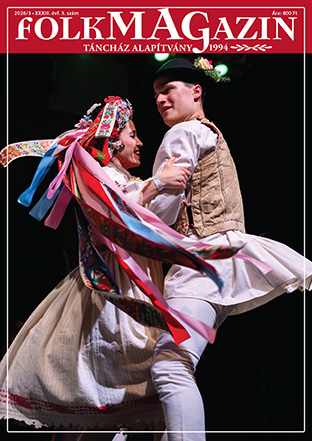

Old writings still relevant today:
2014 Andrásfalvy Bertalan: Love and caring relationships in folk tradition - Folklore’s role in maintaining a healthy society – Part 2.
Society’s greatest weakness today is the inadequacy of human connections: with one another, the natural environment, and with God. In the first section of this paper, Andrásfalvy points out ways that Hungarian folk tradition contributes/contributed to a close-knit healthy community. Traditional village communities included customs for every kind of life situation. He emphasizes the importance and nature of loving/caring relationships in a person’s life, starting with the mother, then family relationships, siblings and friends and the kind of caring demonstrated through children’s games. The Hungarian traditional children’s games help to socialize children and teach them to play with others; they do not include competition, there is no winner or loser. He describes the groups of girls and groups of boys that form as the children grow, learning to work together and get to know one another in preparation for choosing a mate. Traditional songs are an important form of expression. People relate to the stories in ballads (or lamenting songs) through their own experiences or sadness. Also discussed are historical epic songs, and the fact that barely any Hungarian folk historical hero songs have survived. Hungary does however have plenty of outlaw songs or songs of the lonely hero – stories of renegades that stood up against the law or the upper classes. The final thought: poetry and prose in folk tradition is a means of expressing the development, survival, and nature of human caring relationships. Includes bibliography. First published in “Magyar Művészet” - The Hungarian Academy of Art’s theoretical journal 2:3-4. pp 98-106 (2014)
2014 Andrásfalvy Bertalan: Love and caring relationships in folk tradition - Folklore’s role in maintaining a healthy society – Part 2.
Society’s greatest weakness today is the inadequacy of human connections: with one another, the natural environment, and with God. In the first section of this paper, Andrásfalvy points out ways that Hungarian folk tradition contributes/contributed to a close-knit healthy community. Traditional village communities included customs for every kind of life situation. He emphasizes the importance and nature of loving/caring relationships in a person’s life, starting with the mother, then family relationships, siblings and friends and the kind of caring demonstrated through children’s games. The Hungarian traditional children’s games help to socialize children and teach them to play with others; they do not include competition, there is no winner or loser. He describes the groups of girls and groups of boys that form as the children grow, learning to work together and get to know one another in preparation for choosing a mate. Traditional songs are an important form of expression. People relate to the stories in ballads (or lamenting songs) through their own experiences or sadness. Also discussed are historical epic songs, and the fact that barely any Hungarian folk historical hero songs have survived. Hungary does however have plenty of outlaw songs or songs of the lonely hero – stories of renegades that stood up against the law or the upper classes. The final thought: poetry and prose in folk tradition is a means of expressing the development, survival, and nature of human caring relationships. Includes bibliography. First published in “Magyar Művészet” - The Hungarian Academy of Art’s theoretical journal 2:3-4. pp 98-106 (2014)